 1
1Straight Ahead
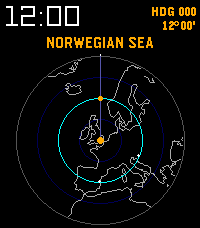
FacesThe world in azimuthal-equidistant projection, centred on you and turned to the way you face. A cyan ring sits one nautical mile out for every minute since midnight (one arcminute of great circle is one nautical mile), so at noon it is 12 degrees away and at 23:59 it touches the rim. The label names what lies where the ring crosses your heading: the nearest major city, or the sea, state or country there. Raise your wrist for 60 seconds of heading-up; flick during that minute for the whole-Earth view, where the vertical line is the great circle you face. By Globe & Atlas. Map data: Natural Earth.
 0
0Origin
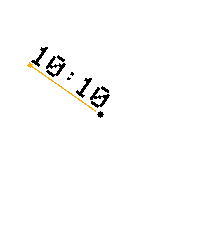
FacesThe time becomes the hand. A digital time string follows a twelve-hour dial, becoming a single upright numeral at exactly 3:00, 6:00, 9:00 and 12:00 for that minute. For Pebble Time 2, with 12 numeral fonts, hand color and width controls, and optional weekday, date, month and year at the top or bottom. Prototype by Globe & Atlas.
 0
0Vector
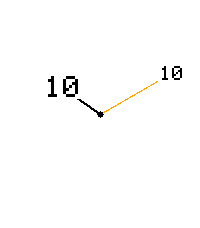
FacesTwo hands, two numbers. The hour sits near the shorter hand tip and the minutes near the longer hand tip; both numbers stay upright. For Pebble Time 2, with 12 numeral fonts, independent hand colors and widths, and optional weekday, date, month and year at the top or bottom. Prototype by Globe & Atlas.
 0
0Meridian
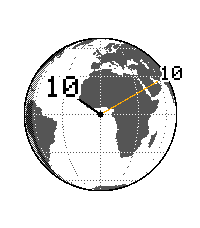
FacesA globe beneath two numbered hands for Pebble Time 2. Calculated day/night shading follows UTC and the season while the clock follows local watch time. Choose a world view, manual location, or optional coarse phone location. Includes upright numerals, 12 fonts, independent hand colors and widths, and optional date fields. The simplified globe shows calculated sunlight, not weather. Prototype by Globe & Atlas.
 0
0Cardinal
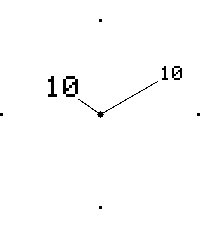
FacesFine black hands, upright hour and minute numbers, and four cardinal points. A minimal watchface for Pebble Time 2 with 12 numeral fonts, independent hand colors and widths, and optional weekday, date, month and year at the top or bottom. Prototype by Globe & Atlas.